

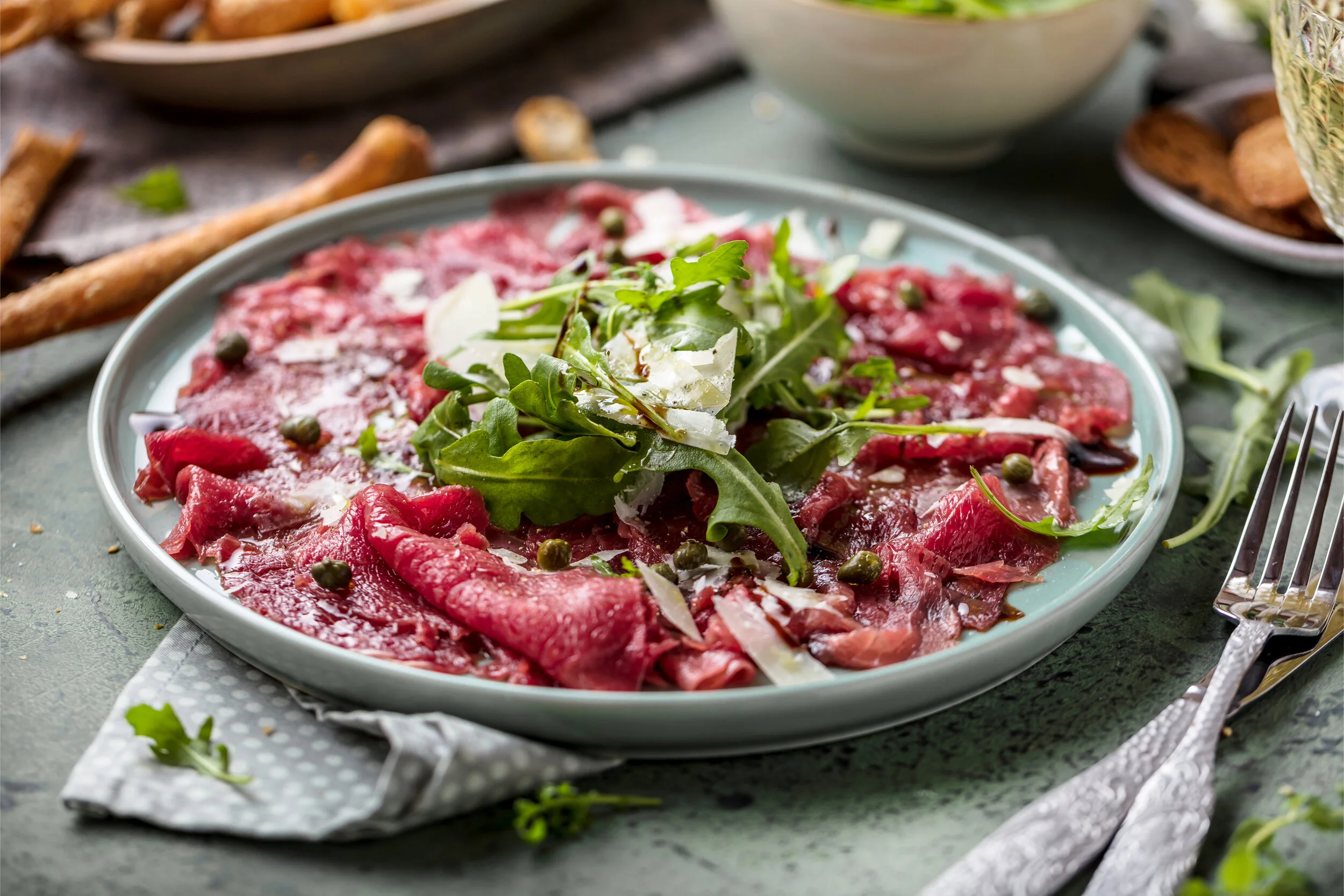
Carpaccio is a dish associated with sophistication, lightness, and elegant presentation. It was first invented in Venice in the mid-20th century and has since become a highlight of restaurant menus worldwide. Its main virtue lies in thinly sliced meat that literally melts in your mouth, enhancing the natural taste and freshness of the product.
In this article, we’ll cover in detail:
- The history of carpaccio
- The classic recipe
- Variations and sauces
- Tips for choosing ingredients
- Secrets from professional chefs
📜 The History of Carpaccio
The dish originated in Venice in the 1950s, when the famous chef Giuseppe Cipriani of “Harry’s Bar” created it especially for Countess Amalia Nani Mocenigo. For health reasons, she was advised to eat only raw meat.
The chef sliced fresh beef very thinly, seasoned it with sauce, and decorated the plate. The name “Carpaccio” was chosen in honor of the painter Vittore Carpaccio, whose works were distinguished by bright red and white tones — reminding the chef of the dish’s colors.
🥩 Classic Beef Carpaccio Recipe
Ingredients:
- Beef (tenderloin or fillet) — 200–250 g
- Extra Virgin olive oil — 2–3 tbsp
- Lemon juice — 1 tbsp
- Parmesan cheese — 30–40 g
- Capers — 1 tsp
- Sea salt and freshly ground black pepper — to taste
- Arugula or mixed salad leaves — a handful
Step-by-Step Preparation:
1. Preparing the meat
- Use only fresh, chilled, high-quality meat.
- Clean the fillet from membranes and fat.
- Wrap the meat in cling film and slightly freeze it for 30–40 minutes. This makes it easier to cut into very thin slices.
2. Slicing
- With a sharp knife, cut the meat into slices no more than 2 mm thick.
- For extra tenderness, lightly pound the slices through cling film.
3. Marinade and dressing
- Mix olive oil and lemon juice in a separate bowl.
- Optionally, add a drop of balsamic vinegar.
4. Serving
- Lay the meat slices on a large plate, slightly overlapping.
- Drizzle with the dressing.
- Add capers and sprinkle with grated Parmesan.
- Garnish with fresh arugula.
🌿 Variations and Additions
Carpaccio can be adapted to different tastes:
- With pesto sauce — adds rich herbal notes.
- With truffle oil — gives an aristocratic touch.
- With balsamic cream — adds a sweet and tangy accent.
- With berries (pomegranate or raspberry) — an unusual option with a hint of sweetness.
🛒 How to Choose Ingredients
For the perfect carpaccio, choosing the right products is crucial:
- Meat — tenderloin is best since it’s soft and delicate. Always buy meat from a trusted source.
- Cheese — traditionally Parmesan, but Grana Padano or Pecorino also work well.
- Oil — only high-quality, cold-pressed olive oil.
- Greens — arugula is the top choice, its slightly bitter taste perfectly complements the meat.
👨🍳 Chef’s Secrets
- Let the meat “rest” at room temperature for 5–7 minutes before serving, so it fully develops its flavor.
- Don’t over-season — carpaccio is prized for its natural taste.
- For a creative presentation, roll the slices into small rolls or rose shapes.
- Instead of lemon juice, you can use lime or even orange juice for a softer note.
✅ Useful Tips
- Serve carpaccio immediately after preparation to preserve freshness.
- It pairs beautifully with a glass of dry red wine or champagne.
- If it’s your first time preparing it, try a small portion for practice.
🍽 Conclusion
Beef Carpaccio is not just a dish — it’s a symbol of gastronomic elegance. People love it for its refinement, lightness, and simplicity of preparation. With just a few ingredients, you can create a true restaurant masterpiece at home.
The key is paying attention to the quality of ingredients and careful presentation. Done right, carpaccio will become the highlight of any table — whether for a romantic dinner, a festive occasion, or a gathering with friends.
Leave a Reply